
Why Your Dog's Harness Has Two Clips: My Secret to Loose Lead Training
You don't have to stop walking your dog to fix the pulling.
If your dog pulls on the lead, walks can feel like a battle and leave you with sore shoulders. You might even feel like you have to stop your daily walks while you train.
The good news? You don't. The answer could be a harness with two clips. Here's how I rank walking kit for loose lead training, plus my top secret tip for using both clips.
How I rank walking kit for loose lead training
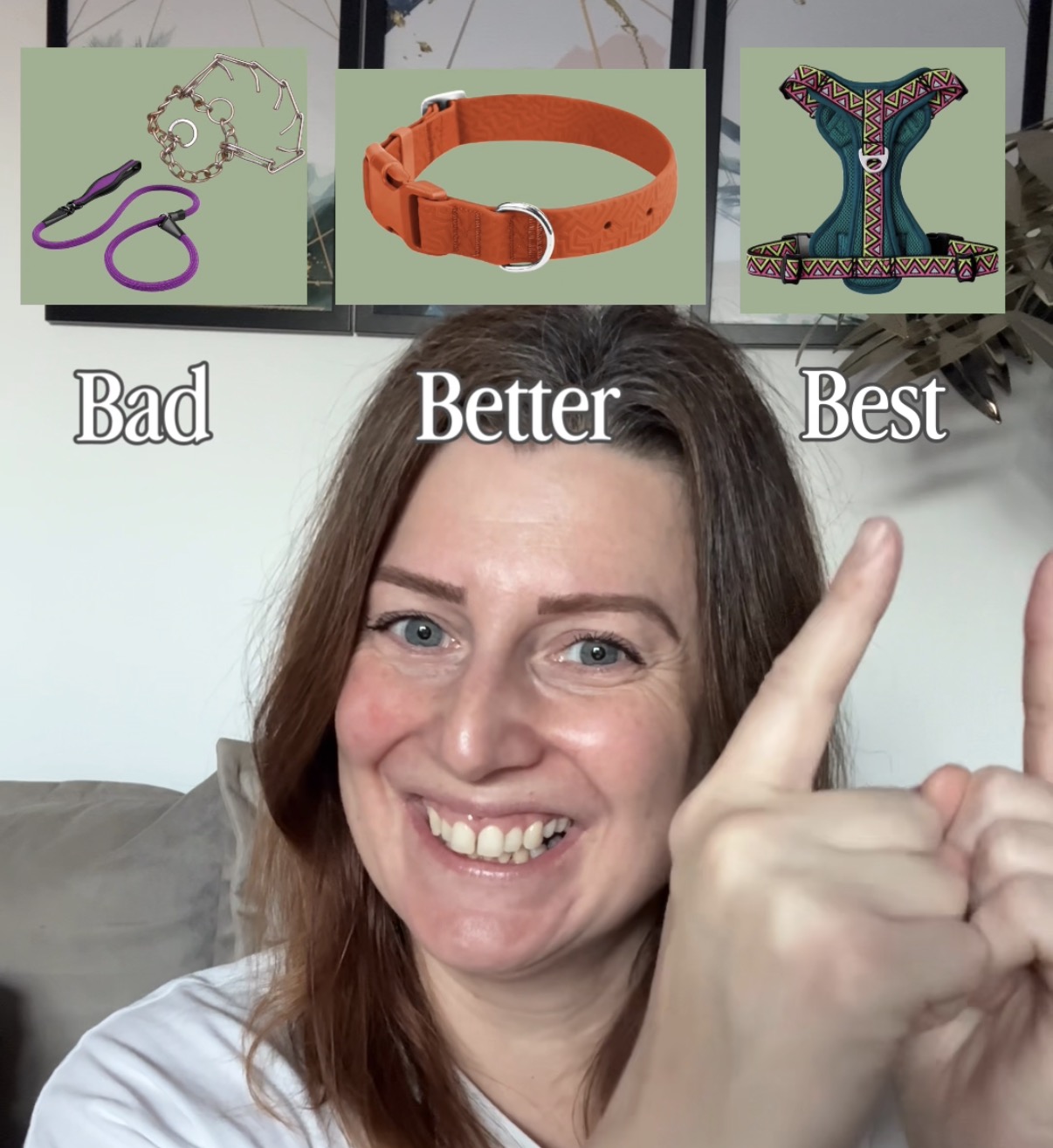
Bad: prong collars and slip leads
For me, these are a big no. They might look like a "quick fix", but I want my dog to walk nicely because they want to, not because they're avoiding discomfort.
Better: a flat collar
A flat collar, used with positive reward methods like food and toys, is much better, as your dog learns not to pull without any discomfort.
Best: a Y-front harness with a front and back clip
This is where my top secret tip comes in. The two clips give you a "training mode" and a "leisure mode", so you can keep up your daily walks while you train.
Training mode: the front chest clip
The front clip sits on your dog's chest, so they can't pull forwards. If they try, it starts to turn them back towards you.
In training mode, we teach your dog to understand their lead length and the space around you where they don't pull. We always reward them at our side, as this shows them where the good stuff happens.
They still get plenty of time to sniff, too. Sniffing is where their brain works, and it's what enriches them.
Think of it like reading. We get some enrichment from reading an article or a newspaper, but it's not until we read a book or a novel that we feel tired. Your dog's nose reading scents does the same! A 20-minute sniffy walk can be more tiring than 60 minutes of exercise.
Don't get me wrong, a balance of both is great, so they can keep their joints and muscles healthy.
Leisure mode: the back clip
The back clip is for leisure mode. Your dog can move without any restrictions, so they're not working. They can just do what they like.
Why leisure mode doesn't undo the training
- The placing of the clip. The front clip feels different on your dog's body from the back clip, so they can tell which mode they're in.
- Different situations, different rules. Dogs are brilliant at learning this. Just like they know the difference between a walk and a trip to the vet, the front clip becomes their signal that it's training time.
- It keeps training mode consistent. When you're tired, busy or just want a nice walk, you switch to leisure mode instead of letting the training slip. So pulling never pays off in training mode, and that's what makes it stick.
Bringing the two modes together
In time, the two modes will merge. Once your dog no longer needs separate training and leisure modes, we introduce a cue to tell them the difference between loose lead mode and free mode.
I use "go sniff", but you could use "free" or any word you like. Your dog will learn when they're reaching the end of the lead by the feel of the clip and the lead going tighter.
Want help with loose lead training?
When I teach loose lead training, I show you how your dog can understand the length of the lead, so they no longer pull but still get to sniff and enjoy all the enrichment from their daily adventures.
My 1-2-1 Walk Your Dog Anywhere workshop is available in person in Cheshire or online worldwide. Get in touch to find out more.
Prefer to learn in your own time? My online masterclass is coming soon!
Natalie, IMDT Qualified Dog Trainer
Nellie's Paws & Co, Dog training that fits the way you think